
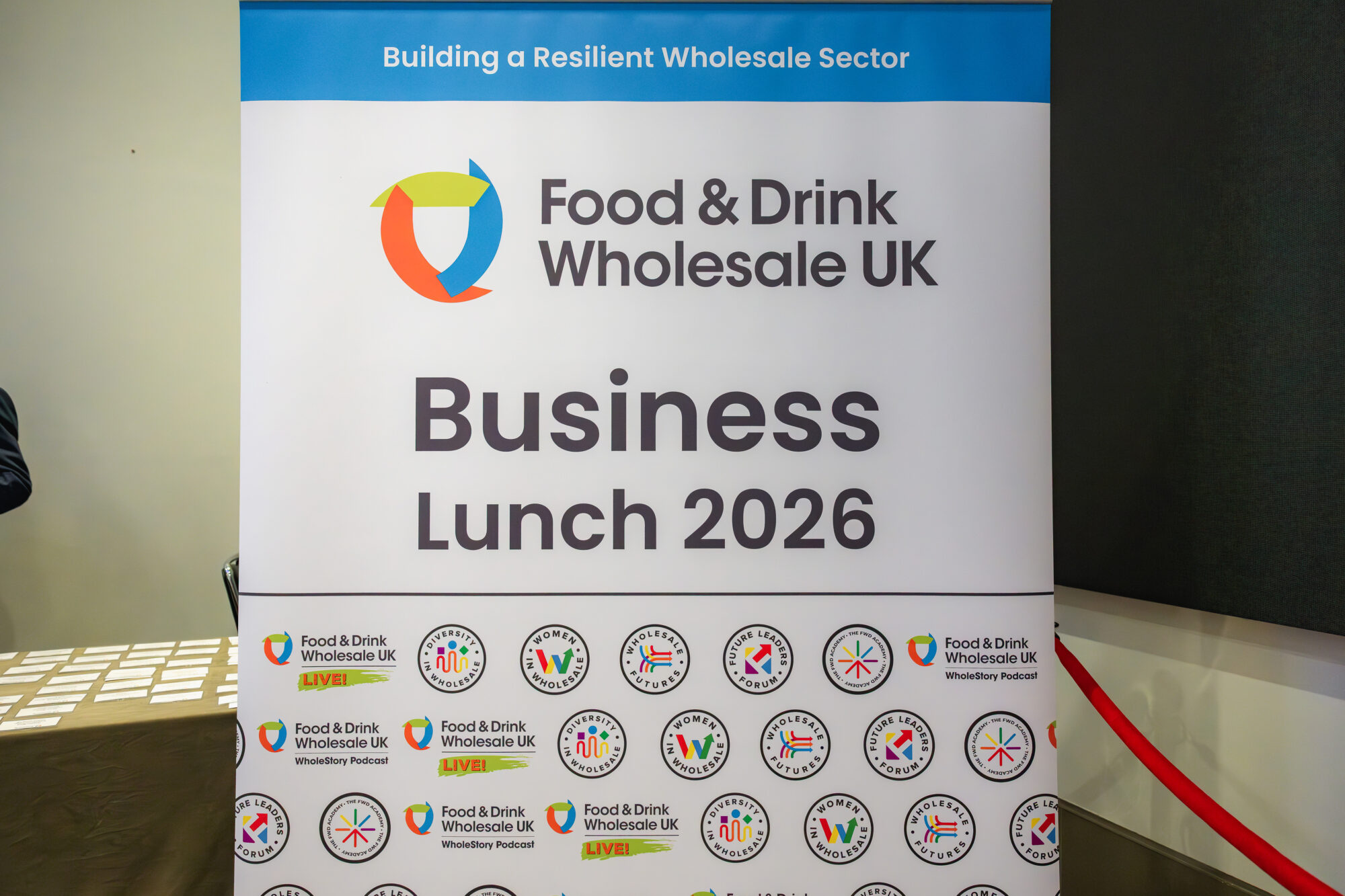
Reflections from the FWD Business Lunch 2026
Last week, I attended the Food & Drink Wholesale UK Business Lunch as a new FWD partner member.
First, credit to the organisers.
The timing and location were spot on. I managed a same-day return without an overnight stay, thanks to a punctual, refreshingly no-frills Ryanair flight and smooth if slightly character-building train connections. In the spirit of resilience, even the airline stayed lean.
More importantly, the welcome was genuine. As a new partner member, I was struck by how open and approachable everyone was. Established wholesalers and suppliers made space for new conversations.
That says a lot about the strength of the FWD community but beyond the logistics, one theme stood out clearly:
Resilience is no longer a talking point. It is structural.
How Are Policy and Political Conditions Affecting Wholesale Resilience?
Baroness Minette Batters delivered a powerful reminder of farming’s central role in national resilience. When the statistic of multiple Prime Ministers in recent years was mentioned, the room absorbed it with calm familiarity. In many sectors, that level of leadership change would feel destabilising.
In Food & Drink, it seems to be part of the operating landscape. There was also a quiet recognition that food resilience does not always sit at the top of the political agenda. Headlines move quickly. Infrastructure rarely does.
For wholesale, however, investment decisions cannot run on news cycles, and the UK adds another dimension.
The UK: A Retail-Dominated Ecosystem
Compared to other major economies, the UK is heavily retail led. Large retail chains shape much of the commercial environment, often overshadowing the systemic role of wholesale.
In many markets, wholesale carries greater structural weight. In the UK, it operates within retail’s gravitational pull, yet wholesale remains the connective tissue between producers and thousands of independent outlets across the country. If retail captures attention, wholesale carries responsibility.
That makes resilience even more critical.
Price, Availability and Margin Discipline
IGD’s insights show that shocks from Covid‑19 to geopolitical instability have permanently reshaped the market. Resilience now rests on two basics: price and availability in a low‑margin sector, inefficiency is costly.
IGD modelling shows climate change could add £2.6bn a year to the UK food system by 2050. Sustainable profitability is no longer optional it underpins sourcing strength and future investment. Demand is also shifting. Protein-led and “better-for-you” categories, partly driven by rising GLP‑1 use, are reshaping ranges.
The question isn’t whether change is coming it’s whether current systems can keep up.
Investing in Wholesale Means Investing in Infrastructure
The Investing in Wholesale panel reinforced a simple truth: wholesale remains one of the most agile parts of the food ecosystem.
What made the discussion particularly valuable was the diversity of perspectives from a family-owned wholesaler to an entrepreneurial drinks brand, from multinational leadership to one of the UK’s largest retail operators. It was a candid conversation about competing in a structurally low-margin environment.
A consistent theme emerged: long-term, sustainable investment is essential. Wholesale’s role in food security is often under-recognised in policy debates, yet the sector carries enormous operational responsibility.
- Dr Jason Wouhra OBE (CEO, Lioncroft Wholesale) spoke about entrepreneurial leadership. In a low-margin business, resilience depends on people willing to tackle challenges head-on and think beyond the next quarter.
- Lindsey Kendal (Sales Director, Kellanova) emphasised demand-led thinking. Start with the retailer’s mindset. Understand how buyers make decisions. Use data intelligently. Build around demand rather than assumption.
- Mark Suddaby (Trading Director Fresh & Frozen, Booker) highlighted the importance of a strong technology stack to enable rapid delivery and support independent retailers in an increasingly demanding market.
- Simon Gray (entrepreneur and formerly Boost Drinks) summarised it well: we must be comfortable being uncomfortable.
Wholesale has real strengths close customer relationships, field sales capability, channel expertise. But agility powered purely by people has limits.
Over the past decade working alongside wholesalers and distributors, I have seen how complexity builds quietly:
- Email-based ordering
- Spreadsheet-driven pricing
- Manual credit checks
- Fragmented reconciliation
It rarely collapses dramatically. It erodes margin gradually. If resilience is the ambition, infrastructure must be the investment. At scale, resilience requires systems that support people not systems that depend entirely on them.
At scale, resilience requires systems that support people not systems that depend entirely on them.
Lessons from the North Pole
Alan Chambers MBE’s concept of “negative drift” walking forward only to be pushed backwards by shifting ice felt like an apt metaphor.
You can execute well and still face forces beyond your control his message was simple: control the controllables
For wholesalers, that means:
- Order flow efficiency
- Margin visibility
- Credit discipline
- Cash reconciliation speed
- Data-informed decisions
You cannot control geopolitics.
You cannot control political turnover.
But you can control operational infrastructure.
On a lighter note, I had my own modest “North Pole” moment on the journey home a minor encounter with a curb resulting in a burst tyre, a few unplanned hours in the cold, and a dark roadside lesson in patience. It was hardly -55°C, but it was a useful reminder that even well-planned journeys can meet shifting ground.
Resilience, whether on polar ice or a late-night motorway, is rarely about avoiding disruption. It is about how calmly and quickly you respond.
The Digital Backbone of Resilience
Throughout the day, one thought kept returning. Resilience now has a digital backbone.
- Structured digital ordering reduces friction.
- Intelligent pricing protects margin.
- Embedded credit and payment workflows strengthen working capital.
- Self-service frees sales teams for growth.
- Data insight accelerates category adaptation.
In a retail-dominated ecosystem, digital maturity also strengthens wholesale’s strategic voice. This is not about building a better website. It is about modernising the machinery of trade.
Final Thought
One insight that stayed with me came from a discussion at the event. The UK holds roughly seven days of national food stock, while Switzerland holds closer to thirty. The exact number may vary, but the contrast is powerful.
For years, efficiency and just-in-time models dominated both public and private strategy. Recent global disruptions have exposed the limits of that approach.
Resilience is no longer optional.
It requires deliberate investment, long-term thinking, and sometimes accepting slightly higher short-term cost for long-term stability.
Whether at a national level with food security, or at a business level with supply chains and digital infrastructure, the real advantage today lies in preparedness not just performance.
The UK wholesale sector operates in a unique environment.
- It supports national food security.
- It absorbs volatility.
- It operates within a retail-dominated ecosystem.
- It navigates political cycles that rarely move at the speed of supply chains.
And yet, much of its infrastructure still carries the weight of yesterday’s systems.
If resilience is the word of the moment, then infrastructure is the work of the decade. Wholesale does not need louder headlines. Digital maturity is no longer a competitive advantage. It is becoming the price of admission.
Having spent over a decade working with B2B wholesalers and now building Apex specifically for this market. I believe the next phase of sector resilience won’t come from reacting to shocks.
It will be defined by the quality of the systems we choose to build today.
Because in a market shaped by margin pressure, retail gravity and policy drift, resilience is not about surviving the next headline.
It is about designing trade to endure beyond it.
Book a demo with Apex B2B Ecommerce to see how wholesale‑ready technology boosts resilience, protects margin and drives growth.